
By the Service Dog Registration of America editorial team. Reviewed against primary sources including the ADA service-animal regulations (28 CFR §35.104) and ada.gov service-animal guidance. Last updated July 25, 2026.
For handlers whose disability makes crowds, lines, or being approached from behind genuinely harder to tolerate, block and cover is one of the most practical psychiatric service dog tasks there is. It's really two related positioning behaviors trained as a pair: "block," where the dog stands in front of the handler, and "cover," where the dog stands behind or beside them. This guide covers what the task actually is, which conditions it helps, how dogs are trained to perform it, and how it fits into the ADA framework.
What Block and Cover Actually Is
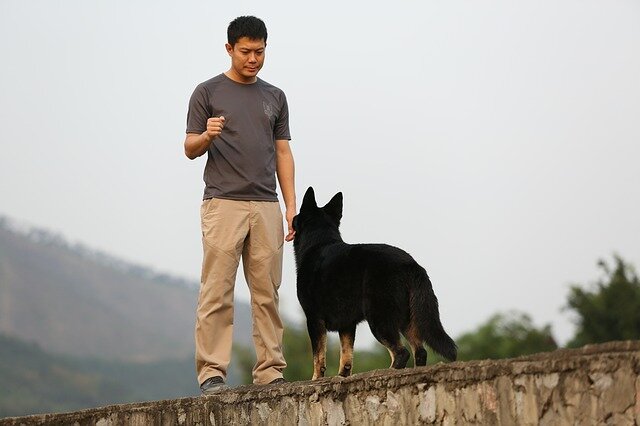
Block and cover is a trained positioning task, not a protective or aggressive behavior. On cue, the dog moves to a specific spot relative to the handler and holds it:
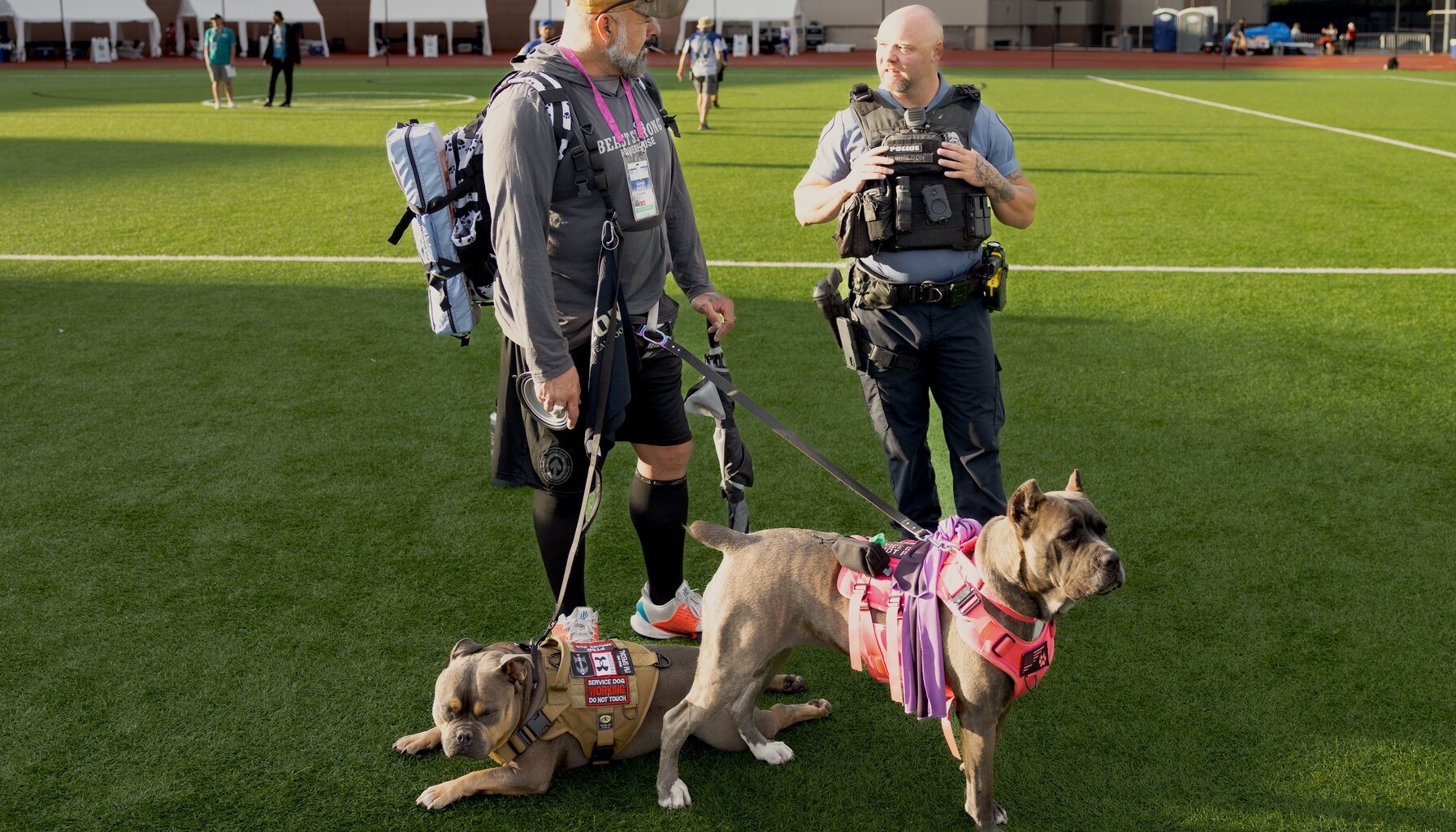
- Block. The dog positions its body in front of the handler, facing outward, creating a buffer between the handler and the people or space in front of them — useful in a checkout line, an elevator, or any spot where someone might stand too close.
- Cover. The dog positions itself behind or beside the handler, often facing backward, watching the space the handler can't easily see. Some teams add a soft alert — a glance back at the handler, a shift in posture — when someone approaches from that direction.
What makes this a task rather than the dog just being nearby is the same thing that defines every service-dog task under the ADA: a specific, trained, on-cue behavior aimed at mitigating a specific effect of the handler's disability. A dog that happens to walk close to its handler isn't performing block and cover. A dog that reliably takes and holds a specific position on cue, in real environments, is.
Who Block and Cover Helps
This task is trained most often for conditions where crowds, lines, or an unwatched space behind the handler trigger hypervigilance or sensory overload. Handlers commonly train block and cover for:
- PTSD, where hypervigilance — a heightened, exhausting need to scan for threats — is a hallmark symptom, and being approached from behind or boxed in by a crowd can be a specific trigger. Our guide to service dogs for PTSD covers the broader task set.
- Anxiety and panic disorders, where crowded, unpredictable spaces can bring on a spike. See service dogs for anxiety.
- Autism, when disabling features are psychiatric in nature and crowded, high-stimulation environments lead to overload. See service dogs for children with autism.
Like most service-dog work, block and cover rarely stands alone. It's usually paired with other tasks — deep pressure therapy after the moment passes, or guiding the handler to an exit if the buffer isn't enough. Our reference on psychiatric service dog tasks organizes the full set by condition, and deep pressure therapy covers a task that often follows naturally once the immediate space is created.
How Dogs Are Trained to Block and Cover
The task is built in stages, from a basic position to a reliable, generalized behavior:
- Teach the two positions separately. The dog first learns to move to a specific spot — directly in front of, or directly behind/beside, the handler — and hold it on a distinct cue for each.
- Add duration and stillness. The dog learns to hold the position calmly for as long as needed, rather than treating it as a quick pass-through.
- Proof around distractions. Training moves from a quiet room to real environments — lines, doorways, elevators, sidewalks — so the dog holds the position reliably even with people moving nearby.
- Add the cover alert, if wanted. Some handlers train the dog to glance back or shift posture when someone approaches from behind, giving an extra, non-verbal cue without turning the dog into a guard animal.
Owner-training is completely legal for this task — the ADA requires no program or certification. One thing worth stating clearly: block and cover should never be trained as a guard, deterrent, or aggressive behavior. A dog that growls, lunges, or postures at people isn't performing a legitimate psychiatric service-dog task — it's an out-of-control animal that a business can lawfully ask to leave. The goal is calm, neutral positioning, not intimidation. Our guides on psychiatric service dog training and training your own service dog cover the methodology, including how to shape and proof a positioning task like this.
Why a Dog Helps Where Willpower Can't
Hypervigilance isn't a choice a handler can simply turn off, and telling yourself to "just relax" in a crowded line rarely works when your nervous system is already scanning for threats. A trained dog changes the physical situation instead of asking the handler to override their own reaction: with a buffer in front and a watched space behind, there's simply less to scan for, and less that can catch a handler off guard. That physical change is often what makes the mental one possible.
That said, block and cover manages a symptom in the moment; it doesn't treat the hypervigilance itself. It works best alongside the care that addresses why crowds or unwatched spaces feel unsafe in the first place — which is where the next section comes in.
Block and Cover and the ADA: Why It Counts as a Task
The ADA defines a service animal as a dog individually trained to do work or tasks for a person with a disability, and it explicitly excludes comfort and companionship alone. Block and cover is a clear example of a qualifying task: it's a trained, deliberate positioning behavior performed on cue to mitigate a specific effect of the handler's disability. That's precisely what the regulation is describing.
Because it's a trained task, a dog that performs block and cover for a person with a psychiatric disability is a psychiatric service dog, not an emotional support animal. If you're working through whether you meet the full standard, our guide on how to qualify for a psychiatric service dog lays out the two-part test. And as always, the task is what creates the dog's rights — not any letter or ID card. See do you need a letter for a psychiatric service dog? for what a letter does and doesn't do.
A Note on What This Task Is Not
A block-and-cover dog is a helpful support, not a treatment. Creating physical space eases the moment, but it doesn't address the underlying hypervigilance or anxiety driving the need for it. Effective treatments for trauma-related hypervigilance and anxiety exist, and a clinician can help you pursue them. Treat the dog as one reliable layer of support that makes crowded, unpredictable spaces more manageable while you do the deeper work with professional care, not as a substitute for it. If hypervigilance or crowd anxiety is affecting your daily life, a licensed clinician is the right place to start, not a website.
Gear and ID Are Optional
A vest or ID card doesn't make your dog a service dog — the trained task does. Some handlers still find visible gear convenient for reducing questions in public, especially with a task like this one that can otherwise look ambiguous to bystanders. If that's useful to you, our service dog ID kit provides it — optional, and never a legal requirement anywhere in the U.S.
What registration is and is not good for is covered in full on our page about psychiatric service dog registration.
Frequently Asked Questions
What does block and cover mean for a service dog?
Block and cover is a two-part positioning task. "Block" means the dog stands in front of the handler, creating a buffer between them and people or space ahead. "Cover" means the dog stands behind or beside the handler, watching the space they can't easily see and sometimes alerting when someone approaches. Both are trained, on-cue behaviors that create physical space and ease hypervigilance.
Which conditions is block and cover trained for?
Block and cover is most commonly trained for PTSD, where hypervigilance and a heightened need to scan for threats are hallmark symptoms, and also for anxiety and panic disorders and for autism, where crowded or high-stimulation environments can lead to overload. It's usually one task among several in a handler's toolkit.
Is block and cover a guard-dog behavior?
No, and it shouldn't be trained as one. A legitimate block-and-cover task is calm, neutral positioning — the dog holds a spot, it doesn't growl, lunge, or posture at people. A dog trained to intimidate or guard isn't performing a real service-dog task and would count as an out-of-control animal a business can lawfully ask to leave.
Can I train my dog to block and cover myself?
Yes. Owner-training is legal under the ADA, which requires no professional program, certification, or registration. You teach the two positions separately, add duration so the dog holds calmly, then proof the behavior in real environments like lines and doorways so it's reliable outside a quiet training space.
Does block and cover treat hypervigilance or PTSD?
No. Block and cover eases a specific moment by creating physical space, but it doesn't treat the underlying hypervigilance or anxiety. Effective treatments exist, and a clinician can help you pursue them. The task works best as one layer of support alongside professional care, not as a replacement for it.