
By the Service Dog Registration of America editorial team. Reviewed against primary sources including the ADA service-animal regulations (28 CFR §35.104, §35.136) and ada.gov service-animal guidance. Last updated July 20, 2026.
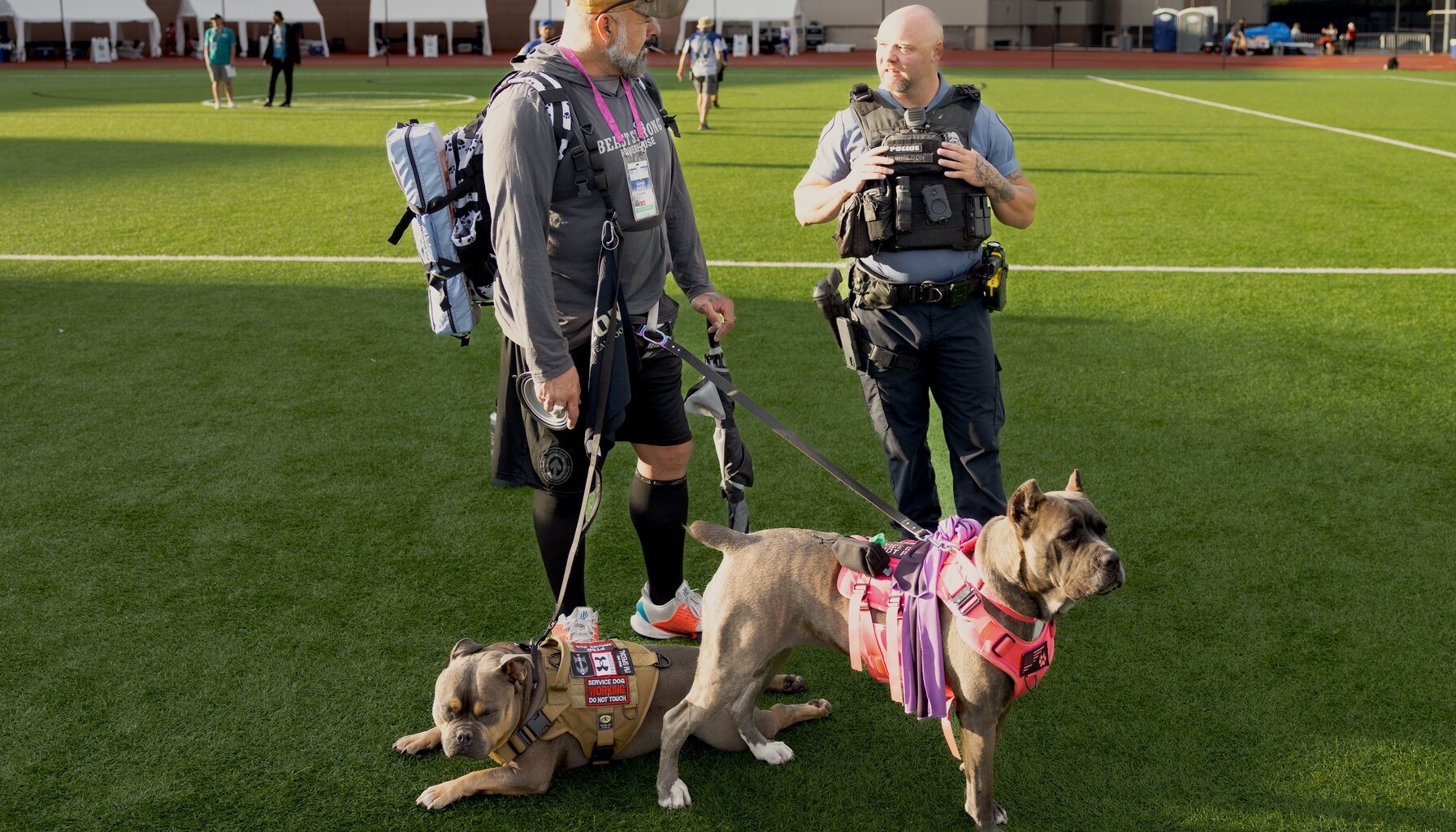
A psychiatric service dog (PSD) has exactly the same public-access rights under the Americans with Disabilities Act as a guide dog or any other service dog. That surprises some people, because psychiatric disabilities are usually invisible and the dog isn't doing anything visually obvious. But the law doesn't rank service dogs by the type of disability they help with. If your dog is trained to perform a task for your psychiatric disability, it's a service animal, and these access rights are yours. Here's precisely what they are — and where they stop.
Where Your Psychiatric Service Dog Can Go
Under the ADA, a service dog can go with you into virtually any place that's open to the public: restaurants, grocery and retail stores, hotels, hospitals and clinics, and government offices. It doesn't matter whether the business has a “no pets” policy — a service dog isn't a pet, and businesses generally must modify those policies to let a service animal accompany its handler. (Your own workplace is a special case governed by a different part of the law — see below.)
The dog is allowed anywhere the public is normally allowed to go. There are narrow exceptions where sterile or safety conditions apply — for example, an operating room or a sterile burn unit — but the everyday places you'd want to bring your dog are covered. Housing and air travel are governed by separate laws, not the ADA's public-access rules, so we cover those separately below.
The Only Two Questions Staff May Ask
This is the rule worth memorizing, because with an invisible disability you're more likely to be questioned. When it isn't obvious what a dog does, ADA guidance permits staff to ask only two questions:
- Is the dog a service animal required because of a disability?
- What work or task has the dog been trained to perform?
You answer both verbally. Notice what's not on the list: staff may not ask about your diagnosis, may not ask you to explain your psychiatric condition, and may not require the dog to demonstrate the task on the spot. You can name the task — “she's trained to interrupt panic attacks with deep pressure” — without ever disclosing what condition you have. Our guides on what businesses are allowed to ask and how to prove your dog is a service dog go deeper on handling these encounters.
No Paperwork, ID, or Registration Required
A business cannot require documentation as a condition of entry. Per ada.gov, covered entities may not require proof that the animal has been certified, trained, or licensed as a service animal. That means no ID card, no registration number, no certificate, and no doctor's letter is legally required to bring your PSD into a business.
This is also why online “service dog registration” and “certification” products carry no legal weight — the Department of Justice does not recognize them, and they convey no rights under the ADA. Your dog's access comes entirely from its training. That said, many handlers choose to carry a visible vest or ID card simply because it heads off questions before they start. That's a convenience, not a requirement — our optional service dog ID kit provides that gear if you find it useful, and it is not a legal requirement anywhere in the U.S. You can read more on why in do service dogs have to wear a vest?
Our page on psychiatric service dog registration covers the same ground from the other direction — what registration actually is, and why no business is obliged to accept it.
Your Responsibilities as a Handler
Access rights come with a couple of real obligations, and these matter because failing them is the one thing that can cost you your access in the moment:
- Keep the dog under control. The dog must be harnessed, leashed, or tethered in public, unless those devices interfere with the dog's work or your disability prevents their use — in which case you maintain control by voice, signal, or other effective means.
- The dog must be housebroken.
- You care for the dog. Staff are not responsible for supervising, feeding, or handling your service animal.
Meet those, and your dog belongs at your side.
When a Business Can Legally Ask You to Leave
Access rights are strong, but they're not unconditional. A business may ask you to remove the dog in two specific situations: if the dog is out of control and you don't take effective action to control it, or if the dog is not housebroken. Even then, the business must offer to serve you without the dog present. A business cannot eject you for other reasons — allergies and fear of dogs are not valid grounds to exclude a service animal.
If a business turns you away improperly, you have options. Our guides on what to do if your service dog is denied access and your recourse when a business breaks the law walk through the steps.
Housing, Work, and Air Travel Are Different Laws
The public-access rights above come from the ADA. Two other settings run on their own rules:
- Housing is governed by the Fair Housing Act, not the ADA, and its standard is different. After HUD's 2026 enforcement shift toward trained service animals, a task-trained PSD holds a strong housing position — our 2026 HUD housing guide explains the change, and renting an apartment with a service dog covers the practical side.
- Your workplace is different from a business open to the public. Bringing a service dog to work is handled as a reasonable accommodation under the employment part of the ADA (Title I), decided case by case through your employer's interactive process — not by the automatic public-access right described above.
- Air travel is governed by the Air Carrier Access Act and has its own airline paperwork and process, separate from anything discussed here. Our guide to flying with a service dog walks through that process, including the DOT form airlines can require.
Frequently Asked Questions
Can a psychiatric service dog go anywhere a regular service dog can?
Yes. Under the ADA, a psychiatric service dog has the same public-access rights as any other service dog. The law does not distinguish based on the type of disability, so a task-trained PSD can accompany its handler into stores, restaurants, hotels, and other places open to the public.
What can staff ask me about my psychiatric service dog?
Staff may ask only two questions: whether the dog is a service animal required because of a disability, and what work or task it has been trained to perform. They may not ask about your diagnosis, require documentation, or ask the dog to demonstrate its task. You answer verbally and never have to disclose your condition.
Do I need to show an ID or registration for my psychiatric service dog?
No. A business cannot require certification, registration, an ID card, or a doctor's letter as a condition of entry. Online registration and certification documents carry no legal weight under the ADA. Your dog's access comes from its training, though some handlers carry a vest or ID voluntarily to reduce questions.
When can a business ask me to remove my psychiatric service dog?
A business may ask you to remove the dog only if it is out of control and you do not take effective action to control it, or if it is not housebroken. Even then, the business must offer to serve you without the dog present. Allergies and fear of dogs are not valid reasons to exclude a service animal.
Does my psychiatric service dog have housing and travel rights too?
Those are governed by different laws. Housing falls under the Fair Housing Act, where a task-trained PSD holds a strong position, especially after HUD's 2026 enforcement shift. Air travel is governed by the Air Carrier Access Act and has its own airline process. The ADA public-access rights described here apply to businesses and public places.