Psychiatric Service Dog Training: The Complete Guide
July 12, 2026
You can train your own psychiatric service dog — no program or certification required. Here is exactly how, task by task.
Purchase service dog vests, IDs, and more.
Guides and resources for service dog registration, training, public access rights, and care.
You can train your own psychiatric service dog — no program or certification required. Here is exactly how, task by task.
In 2026, HUD stopped automatically backing housing complaints for untrained emotional support animals. The Fair Housing Act itself didn't change — but the strongest housing position now belongs to trained psychiatric service dogs. Here's exactly what shifted, what didn't, and what to do about it.
The benefits that our furry canine companions have on our lives are immeasurable. Service Dogs are trained to provide specific tasks to their owners. These animals can help with tasks such as reminding the owner to take their medicine or picking things off the floor to aid people with limited mobility.
Most commonly dogs, but also miniature horses, these trained animals are not considered pets because they are working. An American with Disabilities Act (ADA) ruling in 2010 validated this claim – stating that government agencies, businesses and any other establishment that serves the general public must allow people with disabilities to bring in their service animals in all areas where members of the public are allowed to go. These dogs are viewed as working companions, considering the functions and tasks they help their owners perform.
Since the 1920s, the service dog has helped aid people with disabilities. But it’s only recently that the public has begun to realize the tremendous benefits dogs can have for our physical and mental health. It has led to a surge in people bringing their pets in public.
Traveling with a service animal can prove complicated if the general public or hotel staff ask intrusive questions about the animal’s certification.
Some hotels hold a no-pet policy, but you may encounter confusion at the check-in desk if you have a service dog.
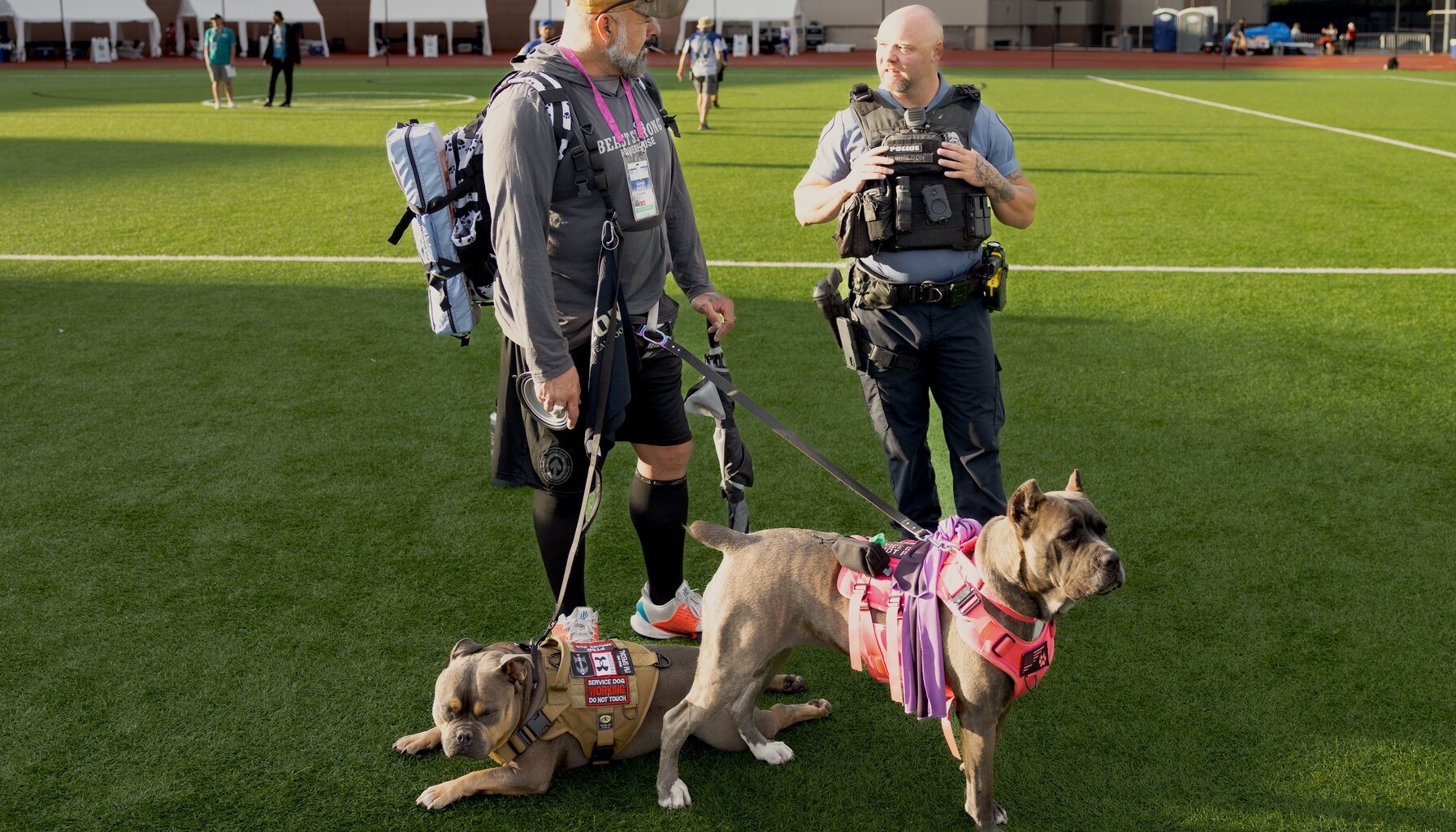
Dogs are more than just man’s best friend. They provide a valuable level of freedom and safety for individuals diagnosed with a disorder or disability. While all service and support dogs may look the same, there are huge differences between emotional support dogs and psychiatric service animals.
The benefits that our furry canine companions have on our lives are immeasurable. Service Dogs are trained to provide specific tasks to their owners. These animals can help with tasks such as reminding the owner to take their medicine or picking things off the floor to aid people with limited mobility.
Most commonly dogs, but also miniature horses, these trained animals are not considered pets because they are working. An American with Disabilities Act (ADA) ruling in 2010 validated this claim – stating that government agencies, businesses and any other establishment that serves the general public must allow people with disabilities to bring in their service animals in all areas where members of the public are allowed to go. These dogs are viewed as working companions, considering the functions and tasks they help their owners perform.
If you’re an individual with a disability, a service dog may change your life.
Service dogs help their owners take back control of their life, from navigating transportation to fulfilling emotional needs, like therapy dogs.
Service animals bring unlimited help, care, and companionship into the lives of the owners who train and care for them. It only makes sense to make life easier for them by registering the animal in your state.
Since the 1920s, the service dog has helped aid people with disabilities. But it’s only recently that the public has begun to realize the tremendous benefits dogs can have for our physical and mental health. It has led to a surge in people bringing their pets in public.
Since the passage of the Americans with Disabilities Act (ADA) in 1990, people across the country living with a disability have been guaranteed the right to keep a service animal to protect and assist them.
If you suffer from a disability, life can be difficult without your furry canines. Service animals provide the opportunity to interact with the world in a way that wouldn’t otherwise be possible. However, if you’re concerned about being denied access to public places, you don’t have to worry.
The simple answer to this question is yes. However, a business may only ever ask you to leave when you are with your service dog in certain contexts. If they ask outside of these contexts, they are violating the rules surrounding service animals.
Read on to learn more about which situations might make this permissible in public situations.
The Americans with Disabilities Act (ADA) ensures protections for people with disabilities. Part of this protection includes the right for a person with a disability to have a service dog. Service dogs can help manage daily tasks, making life easier for their owners.
Unfortunately, a service dog also might make a person with a disability stand out. Businesses often ask probing questions about the service dog. Depending on the nature of these questions, they may violate the rights of the person with a disability.
The ADA sets forth guidelines for business owners to follow, but that doesn’t mean these businesses always comply. You should know your rights when entering a place with a business. Here, we cover the kinds of questions businesses are permitted to ask you without violating your rights.
All businesses must allow people with disabilities to access their premises with a service dog. In fact, the law requires it. However, far too often, businesses do not follow these practices. They will prohibit a person from entering the establishment even when they state their animal is a service animal.
In this guide, we’ll cover the protections you are guaranteed under the Americans with Disabilities Act (ADA). We’ll also address what actions you can take if a business fails to comply with the law and violates your rights as a service dog owner.
The 1990 Americans with Disabilities Act (ADA) was and still is a historic piece of legislation that impacts any person with a disability and even the non-disabled people in their lives. However, not many people understand the full scope of this life-changing law.
Service animals offer the support needed to get through challenging tasks. They are great aids for individuals who have a disability and need help completing physical tasks. Service animals are trained to do the work and help their owner with specific needs. They are highly skilled since they must go through hours of training sessions.
If you have a dog, it can be challenging to find an apartment to rent. This is because many landlords have a no-pet policy. They fear that animals will disturb other tenants, damage property, or even cause issues with their insurance.
Finding an apartment is much easier with a service animal than with a regular pet.
That’s because service animals are considered assistance animals that perform specific tasks or provide emotional support for their disabled owners.
Traveling with a service animal can prove complicated if the general public or hotel staff ask intrusive questions about the animal’s certification.
Some hotels hold a no-pet policy, but you may encounter confusion at the check-in desk if you have a service dog.
Yes — a trained service dog flies in the cabin with you at no charge under federal law. Most airlines require one piece of paperwork first: the U.S. DOT Service Animal Air Transportation Form. Here is how the current form works, section by section, plus every major U.S. airline's policy and what to expect on travel day.
Traveling with your dog is easier now than ever before, but there are still a lot of important things to keep in mind – especially when it comes to air travel and hotels. When done wrong, travelling with your pet can be stressful and you’ll wish you had just left your friend at home. However, when done right, it can be an easy and rewarding experience. There are two aspects to making a successful trip with your dog: planning ahead and knowing the laws.
You can train your own psychiatric service dog — no program or certification required. Here is exactly how, task by task.
A psychiatric service dog is defined by the tasks it performs, not by how it makes you feel. Here is a complete, honest list of real PSD tasks, organized by the conditions they help.
Deep pressure therapy (DPT) is a trained service dog task where the dog applies steady body-weight pressure to calm a handler during panic, anxiety, or overwhelm. Here is what it is, who it helps, and how dogs learn it.
A medication-reminder service dog is trained to prompt its handler to take medication on time — a small, reliable task that makes a real difference for conditions where a missed dose has real consequences. Here is what it is, who it helps, and how dogs learn it.
A service dog for PTSD is a psychiatric service dog trained to perform specific tasks — waking you from nightmares, grounding you during a flashback, creating space in crowds. Here is what they do, how to get one, and the rights you actually have.
A service dog for depression is a psychiatric service dog trained to perform specific tasks — prompting you out of bed, reminding you to take medication, interrupting a spiral, grounding you during a low. Here is what they do, how to get one, and the rights you actually have.
Many people don’t know that you can train your own service dog. That’s why we’ve put together this guide for learning about and training them yourself. It doesn’t just save you money; it gives you valuable bonding time with your animal.
If you’re thinking about investing in a service dog to help you with a disability, you likely know that additional costs come with owning these canines compared to the average pet.
Service dogs are highly trained, capable animals. Because they assist and perform tasks for people with diverse abilities and needs, it’s vital that the training they receive is comprehensive and professional. For that reason, the costs associated with training a service dog are high. However, this high cost comes with benefits. The higher fees mean you’re getting the best-trained canine possible. For example, it can take years to train a seeing eye dog and very few of those that are trained get accepted as working dogs.
Service animals, particularly canines, can be life-changing assets for folks with physical disabilities and those suffering from severe mental disabilities or a history of trauma.
Service dogs are an invaluable asset to many people with disabilities. They’re more than just man’s best friend – many handlers rely on their dogs to navigate their daily lives. These furry companions are often seen wearing vests that identify them as official service dogs. Here, we discuss the ins and outs of these vests.
Service dogs do incredible work and aid their owners in various life-changing ways. Because of this, the equipment they use should serve the same purpose so that they can continue to support their owners in invaluable ways.
Service dogs are lifelines for their owners. For people living with physical or psychological disabilities, the assistance that service dogs provide is life-changing.
Health insurance does not pay for a service dog, its training, or its vet bills. What can help: pet insurance for the dog's own medical care, the liability half of your homeowners or renters policy, tax-advantaged accounts like an HSA or FSA, and a handful of programs that cover specific people. Here is the honest version, with the numbers.
There is no separate insurance product called service dog liability insurance. The coverage that protects a handler if their dog injures someone is the personal liability section of a homeowners or renters policy, backed up where needed by an umbrella policy or a standalone canine liability policy. Here is what each one covers, and the exclusions to check before you need them.
If you’re thinking about investing in a service dog to help you with a disability, you likely know that additional costs come with owning these canines compared to the average pet.
Service dogs are highly trained, capable animals. Because they assist and perform tasks for people with diverse abilities and needs, it’s vital that the training they receive is comprehensive and professional. For that reason, the costs associated with training a service dog are high. However, this high cost comes with benefits. The higher fees mean you’re getting the best-trained canine possible. For example, it can take years to train a seeing eye dog and very few of those that are trained get accepted as working dogs.
The cost of a psychiatric service dog depends almost entirely on how you get one. Owner-training can cost little beyond normal dog care, while a fully trained program dog can run into five figures. Here is an honest, path-by-path breakdown.
In short, a service animal is a tax write off. Service dogs are working animals for people with disabilities. As a result, their owners won’t be penalized with taxes for using their animal as a medical device.
Below are the answers to some of the commonly asked questions about taxation and service dogs.
We all know that dogs are amazing creatures. Their friendliness and loyalty really do make them man’s best friend.
Service dogs are an even bigger blessing. These animals are super smart and are committed to learning important tasks. This allows them to help owners with disabilities overcome challenges and live a normal life.
Think that you could benefit from a service dog? The laws and other specifics surrounding this topic can get confusing. Plus, with all the information out there, you might not know where to start.
In this article, we provide you with a comprehensive guide. Here’s everything you need to know about these animals and how you can apply for one.
If you’re thinking about investing in a service dog to help you with a disability, you likely know that additional costs come with owning these canines compared to the average pet.
Service dogs are highly trained, capable animals. Because they assist and perform tasks for people with diverse abilities and needs, it’s vital that the training they receive is comprehensive and professional. For that reason, the costs associated with training a service dog are high. However, this high cost comes with benefits. The higher fees mean you’re getting the best-trained canine possible. For example, it can take years to train a seeing eye dog and very few of those that are trained get accepted as working dogs.
All businesses must allow people with disabilities to access their premises with a service dog. In fact, the law requires it. However, far too often, businesses do not follow these practices. They will prohibit a person from entering the establishment even when they state their animal is a service animal.
In this guide, we’ll cover the protections you are guaranteed under the Americans with Disabilities Act (ADA). We’ll also address what actions you can take if a business fails to comply with the law and violates your rights as a service dog owner.
The Americans with Disabilities Act (ADA) ensures protections for people with disabilities. Part of this protection includes the right for a person with a disability to have a service dog. Service dogs can help manage daily tasks, making life easier for their owners.
Unfortunately, a service dog also might make a person with a disability stand out. Businesses often ask probing questions about the service dog. Depending on the nature of these questions, they may violate the rights of the person with a disability.
The ADA sets forth guidelines for business owners to follow, but that doesn’t mean these businesses always comply. You should know your rights when entering a place with a business. Here, we cover the kinds of questions businesses are permitted to ask you without violating your rights.
If you suffer from a disability and require assistance with daily tasks you may qualify for a service dog per the Americans with Disabilities Act.
You’re probably wondering whether or not your dog meets the requirements for this. In particular, you may be curious if there is a size limit or any other criteria for service dogs. Here is everything you need to know about size limits and service dogs.
In short, a service animal is a tax write off. Service dogs are working animals for people with disabilities. As a result, their owners won’t be penalized with taxes for using their animal as a medical device.
Below are the answers to some of the commonly asked questions about taxation and service dogs.
The simple answer to this question is yes. However, a business may only ever ask you to leave when you are with your service dog in certain contexts. If they ask outside of these contexts, they are violating the rules surrounding service animals.
Read on to learn more about which situations might make this permissible in public situations.
For those who suffer with anxiety, depression, or any other mental or physical disorders, everyday life can feel challenging or even debilitating. The basic activities that many do without a second thought are much more difficult for people with a mental illness.
Many people living with these disorders have emotional support animals to help them through these hard times. These animals can help provide a calming support for their owners in times of distress.
Many people have found the help of these furry counselors get them through the dark struggles of their conditions more effectively than medication. Moreover, there is a common misconception that registering one’s animal is all one needs to do in order to have an ESA. This is not the case. By simply registering your ESA on our site we will provide you with important legal updates and info impacting ESA owners. A letter from a licensed mental health professional is what makes an ESA valid.
While the title of service animal is restricted to dogs and miniature horses, the role of an emotional support animal can be taken by an animal of any species. In this article, however, we will focus on getting your dog officially set up as an emotional support animal.
Having a service dog can truly change your life. From guiding visually impaired people to turning on lights or alerting bystanders of a seizure, these animals truly perform amazing work. Around 500,000 people in the U.S use the support of a service dog. They don’t just drastically improve the lives of their owners but can be life-saving, too.
Certified under the American’s with Disabilities Act (ADA), a service dog does not have to wear identifying clothes or a harness. This is entirely up to your discretion. However, there are times when apparel may help to protect you and your service dog. In this guide, we cover what you need to know about service dogs and identifying clothes or a harness.
The lines are blurry when it comes to what a service animal is vs what counts as an emotional support animal. It can be difficult to tell the difference if you don’t know what you’re looking for. This can make it difficult for businesses to know what to allow in their stores.
An Emotional Support Animal’s sole responsibility is to provide comfort for their owner. Since they are not specifically trained to offer any other services, these animals are not considered “Service Animals”.
A mental health professional must write a letter stating that an emotional support animal would add therapeutic value to a patient. However, a person must have a disability in order to quality for a Service Dog. Service dogs are specifically trained in a variety of skills to help the disabled individual with day-to-day tasks.
These are just a few of the key differences. Here, we will break down what exactly makes these service and emotional support dogs different.
Get your service dog registered with ID cards, vests, and certificates in minutes.